
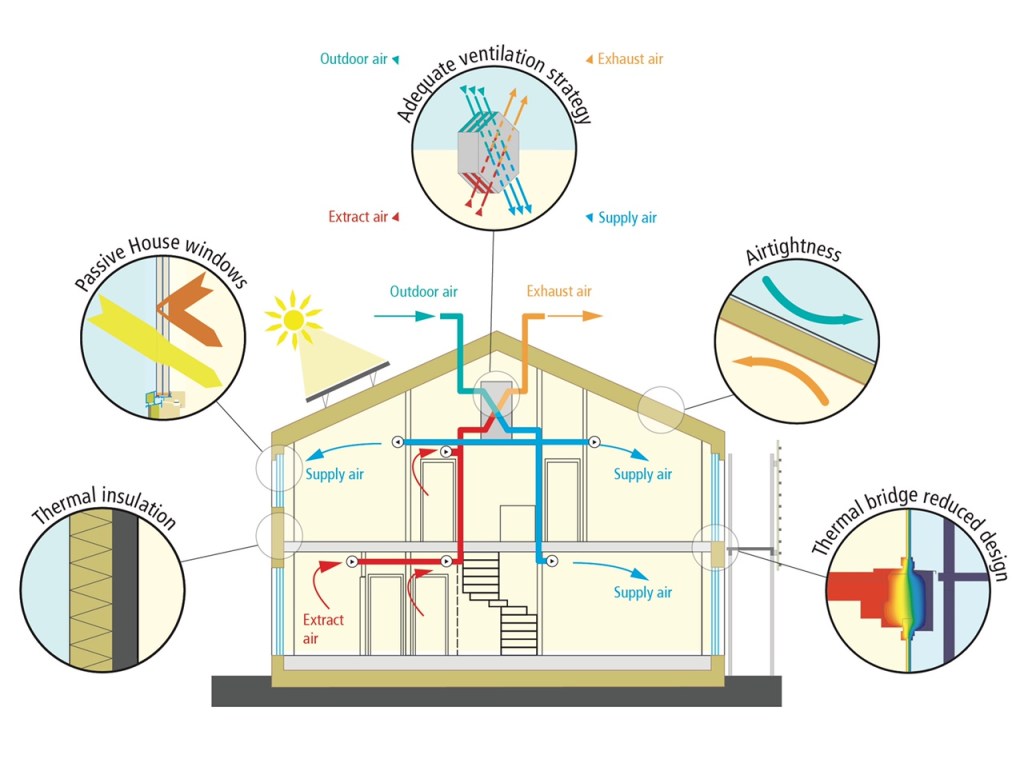
Net Zero Energy Building (NZEB) represent the future of sustainable construction. By utilising renewable energy sources, these buildings can offset their operational energy consumption. The Passive House designed standard is widely recognised as the gold standard for achieving NZEB, providing exceptional thermal comfort with minimal heating and cooling requirements. This is accomplished through high levels of insulation, airtight construction, and optimised window and door design. Additionally, heat recovery ventilation systems and the elimination of thermal bridges further enhance energy performance.
Passive House is a design approach applicable to all building types, delivering exceptional air quality and comfort while using up to 80% less energy than conventional buildings.
Main features of a “Classic” Passive House
1. Cooling and Heating Demand <15 kWh/m2 meter annually.
2. Primary Energy Demand <60 kWh/m2 annually for heating, cooling, ventilation, hot water and electricity.
3. Air tightness of 0.6 air changes/hour at 50 Pa pressure.
4. Thermal Comfort is maintained in all living areas. Temperatures range between 20 and 25 degrees. Relative humidity is 60% at 25 degrees.
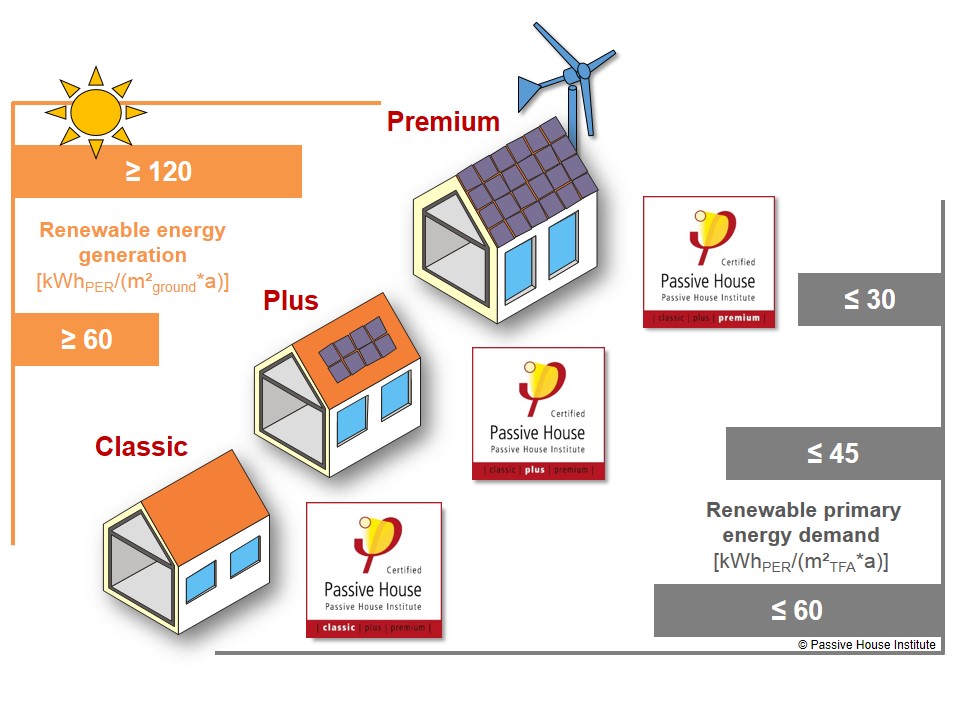
Depending on the Primary Energy Demand, a Passive House can be classified as:
– Classic (<60 kWh per sq.m.),
– Plus (<45 kWh per sq.m.), or
– Premium (<30 kWh per sq.m.).
How does Passive House achieve this performance?
1. Orientation of the building, exploitation of solar energy and shading elements.
2. Uninterrupted building envelope insulation.
3. Thermal bridge-free design.
4. Thermal break windows with double or triple glazing.
5. Mechanical ventilation with heat recovery and filtered circulation of air.
 NZEB Energy Rating